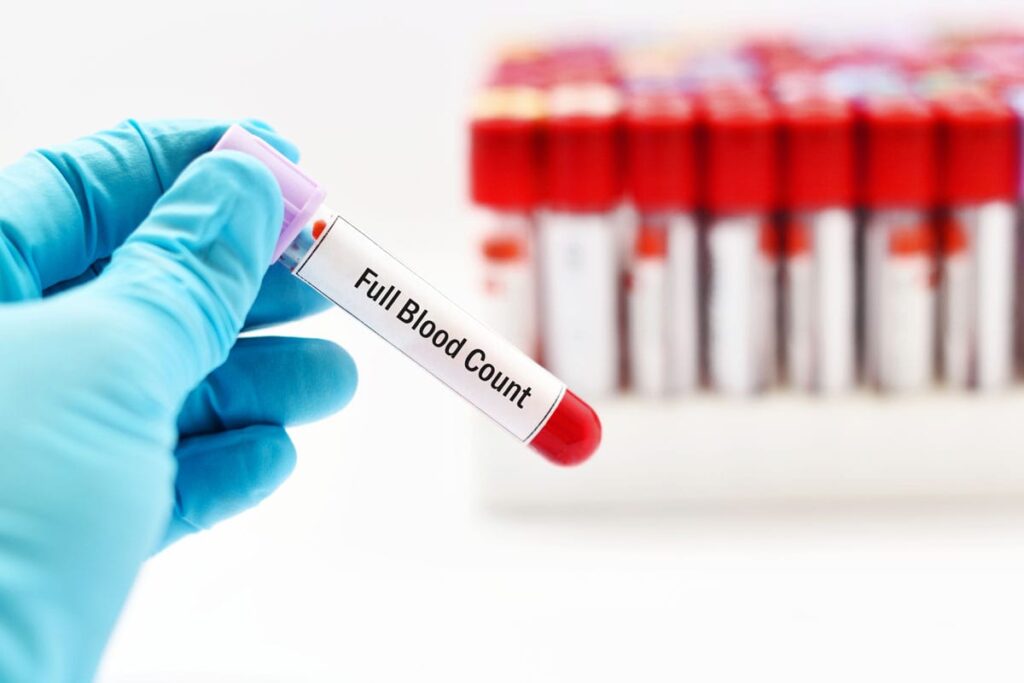
Full Blood Count Interpretation
A Full Blood Count is one of the most common blood tests performed. It provides a snapshot of the different types and numbers of cells in your blood, including red blood cells, white blood cells, and platelets. Interpreting an FBC involves analyzing each component relative to established reference ranges and considering them in the context of the individual’s overall health and clinical symptoms.
Course Content
Major Blood Component – Full Blood Count
-
Red Blood Cells (RBC)
-
Hemoglobin
-
Hematocrit
-
White Blood Cells (WBC)
-
Platelets (PLT)
-
WBC Differential Count
-
Simplified FBC Learning Model
-
Clinical Example of FBC Interpretation
-
Common Conditions Diagnosed Using FBC
-
Check Mean Corpuscular Volume (MCV)
-
Evaluate Red Cell Indices
-
Check White Blood Cell (WBC) Count
-
Differential Count Clues
-
Assess Platelet Count
-
Complete FBC Interpretation Flow (Clinical Algorithm)