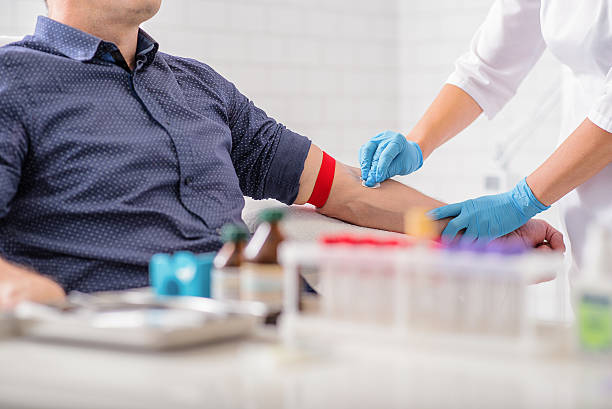
Phlebotomy Skills
This course provides students with the theoretical knowledge and practical skills required for safe and effective blood collection (phlebotomy) in clinical settings. The course covers the principles of venipuncture and capillary blood collection, patient preparation and identification, infection prevention and control, specimen handling, labeling, and transportation. Students will learn the anatomy and physiology of the circulatory system as it relates to blood collection, as well as common complications and how to manage them.
Emphasis is placed on maintaining patient safety, professional communication, ethical practice, and adherence to laboratory quality standards. The course also introduces students to different blood collection equipment, the order of draw, and proper documentation procedures. By the end of the course, students will be able to perform phlebotomy procedures competently while ensuring patient comfort and specimen integrity for accurate laboratory analysis.
Course Content
Introduction
-
Explain the anatomy and physiology of the circulatory system relevant to phlebotomy
-
Identify appropriate sites for venipuncture and capillary puncture.
-
Demonstrate correct venipuncture and capillary blood collection techniques.
-
Apply infection prevention and control measures during blood collection.
-
Follow the correct order of draw and specimen handling procedures.
-
Identify and manage complications associated with phlebotomy.
-
Demonstrate professional communication and patient care during specimen collection.
-
QUIZ